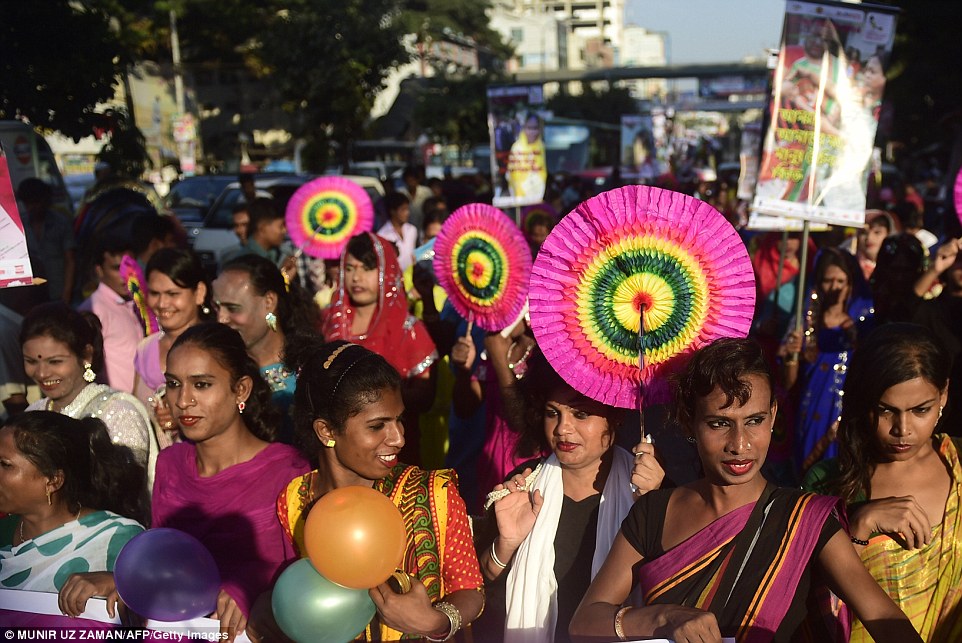
On 10 November 2014, hundreds of hijra people took to the streets of Dhaka in colourful sarees, carrying placards and raising their voices for recognition, dignity and equal rights. With music, dance, mehendi, performances and a vibrant procession, the capital witnessed Bangladesh’s first-ever Hijra Pride festival. More than a celebration, the event marked a historic moment of visibility for a community that had long been pushed to the margins of society.
The festival was organized to mark the first anniversary of the government’s decision, made on 11 November 2013, to recognize the hijra community as a separate gender identity. Held from 10 to 11 November, the celebration brought together hijra participants from different parts of the country. According to the organizers, around 1,000 members of the community took part in the festivities, making it a significant gathering for the community and its allies.
The program featured a colorful procession, a mehendi festival, talent competitions, cultural performances and discussions on rights and policy. Participants used the occasion not only to celebrate their identities but also to demand meaningful recognition and equal treatment in everyday life.
One of the key outcomes of the festival was the Dhaka Declaration, through which participants called on the government and law enforcement agencies to ensure the rights and security of the hijra community through comprehensive legislation. Although the government had formally recognized the community, discrimination remained widespread in education, employment, healthcare, social protection and access to public services. The declaration sought to turn symbolic recognition into enforceable rights and protections.
The festival concluded with a cultural program at the National Museum, where hijra performers showcased their talents through music, dance, poetry and theatre. The competitions provided a platform for participants to be recognized for their artistic abilities. Diana won first place in the dance competition, Anannya came second, while Mostafa from Rajshahi secured third place in singing.
One particularly moving performance was presented by a participant named Kotha. Through a performance titled “Kotha,” she portrayed the experiences of rejection by family and society, highlighting the pain of social exclusion, homelessness and the struggle for acceptance. The performance brought a different dimension to the celebrations, reminding audiences that pride is not only about visibility and joy but also about the struggle for safety, belonging, love and dignity.
The festival also drew participation from members of the wider public and cultural community. One parent attended with their children, hoping that early exposure would help them grow up without the fear and prejudice often directed towards hijra people. Such moments reflected the organizers’ broader aspiration to challenge social stigma and build greater understanding.
Hijra Pride 2014 took place at a time of growing expectations following the government’s recognition of the community. Yet participants emphasized that official recognition alone was not enough. Without comprehensive legislation and practical measures, the community continued to face barriers to education, employment, healthcare and basic citizenship rights. Their message was clear: recognition must extend beyond government declarations and translate into equality in everyday life.
More than a decade later, Hijra Pride 2014 remains an important chapter in the history of Bangladesh’s queer and gender-diverse rights movement. It was a collective assertion of presence, identity and agency, a moment when hijra people claimed public space, told their own stories and made their demands impossible to ignore. The memory of that colourful procession continues to remind us that recognition is not a favor, and dignity and equal rights are not temporary demands. They are fundamental rights.
Sources


Leave a Reply