Press Release
17 September 2026
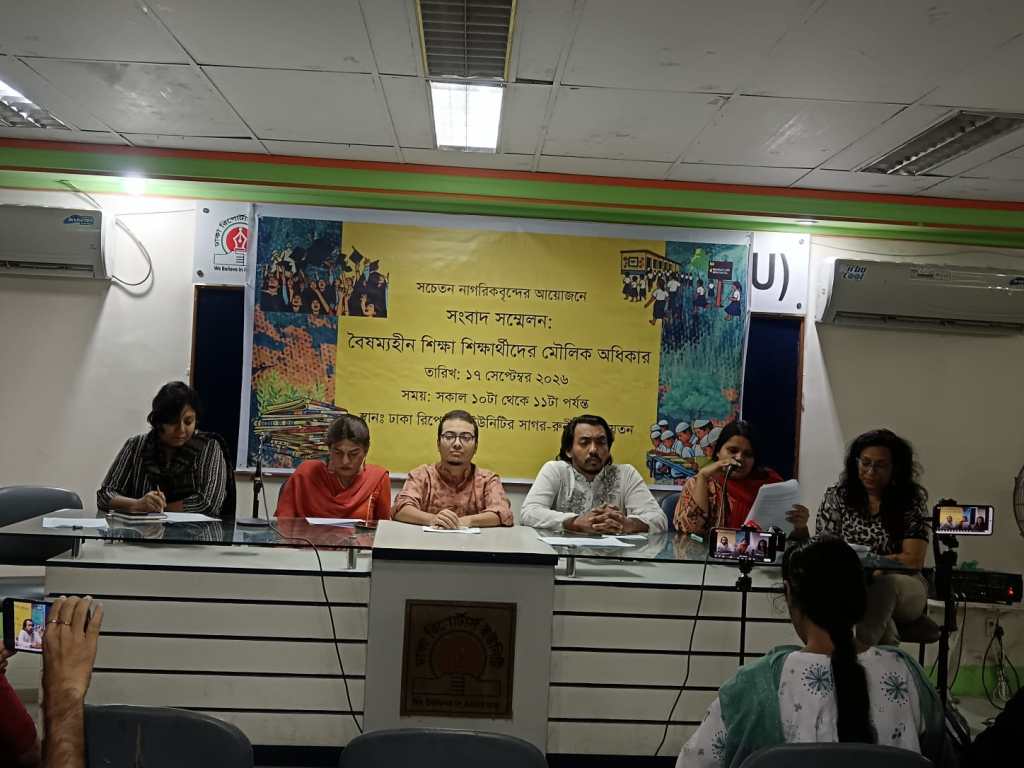
Conscious citizens organized a press conference to demand that the government and university administration ensure students’ safety, dignity, and right to education. This action is in response to the recent incidents of harassment, boycotts, bullying, violations of personal privacy, mob violence, and expulsions from halls or institutions, targeting LGBTIA+ and hijra students at various higher education institutions across the country.
At the press conference today, September 17, 2026, speakers stated that living safely in a dormitory, attending classes and examinations regularly, and completing one’s education without the fear of intimidation, harassment, or violence are fundamental rights of a student. Depriving a student of education, harassing them, or exposing them to violence based on their identity, opinions, beliefs, orientation or personal life is unacceptable; rather, it represents a failure on the part of the state. A citizens’ statement signed by 135 individuals and an eight-point list of demands were presented at the press conference. The speakers called upon educational institutions and the state to ensure student safety, guarantee accountability for incidents of harassment and violence, and create an environment for education free from discrimination.
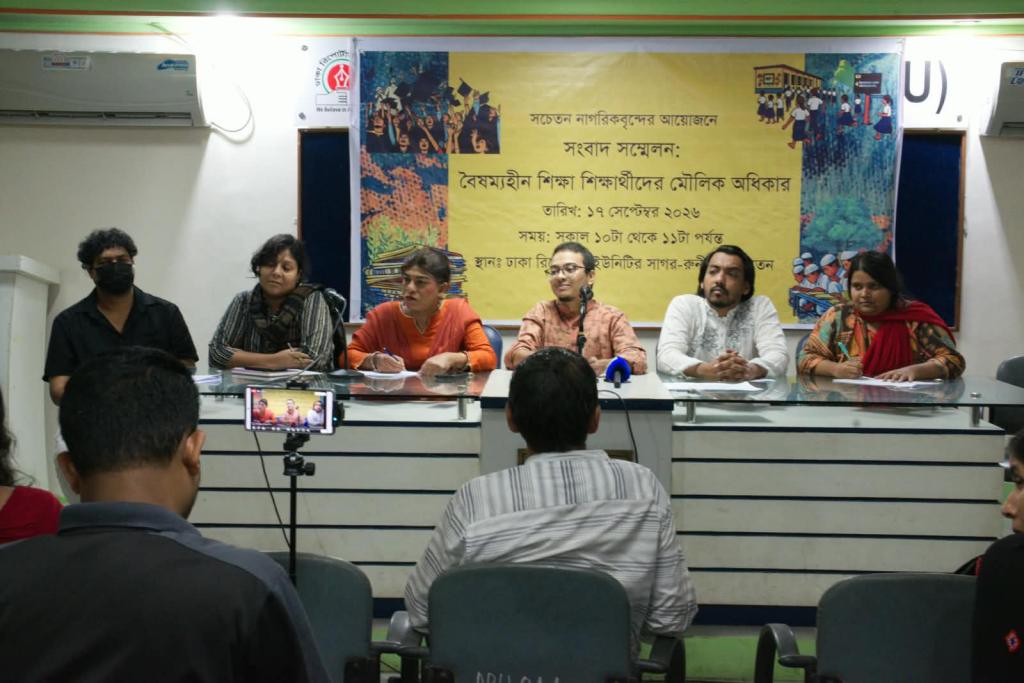
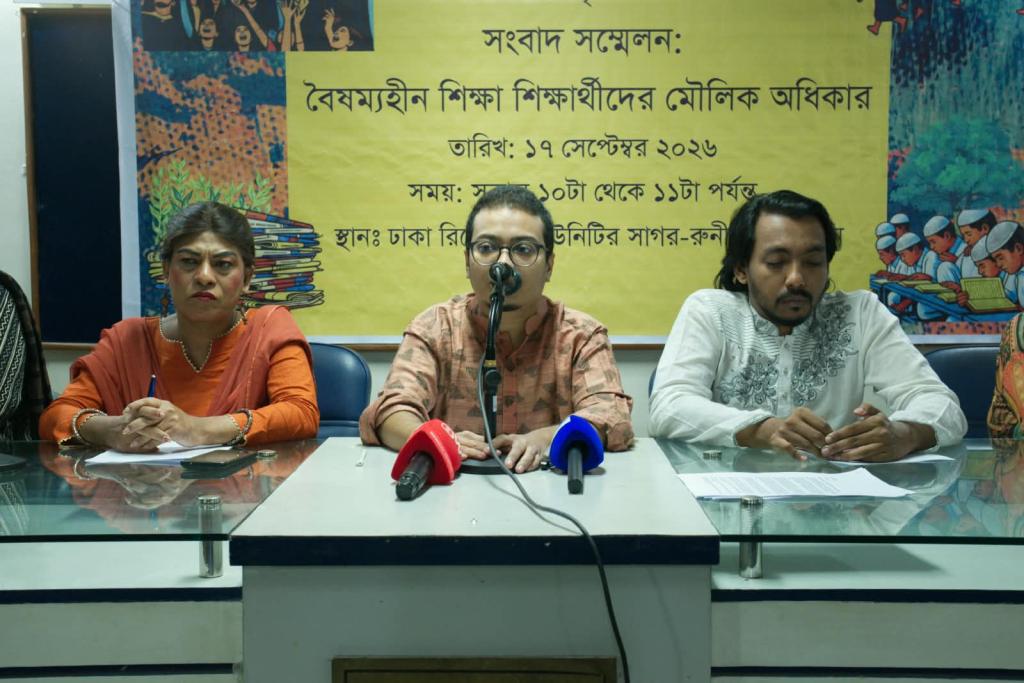
Nirnoy Islam, teacher and Convener of Diverse Feminist presided over and moderated the press conference. Tasaffy Hossain, Convener, Bonhishikha, Marzia Prova, Convener, ‘Red Feminist Bloc, Joya Sikder, Transgender Rights Activist, Muntasir Rahman, LGBTQIA+ activist and Convener, Byanjona Foundation, Md. Hasibur Rahman, Convener, Mondro, and Nasrin Siraj, teacher and anthropologist, also represented Conscious Citizens in the panel.
In her welcome address, Bonhishikha’s Convenor Tasaffy Hossain stated that an inclusive education system cannot be established merely through policy declarations; it requires structural planning, implementation and accountability. A truly inclusive framework must ensure access and safety for various marginalized groups, including indigenous communities, persons with disabilities, LGBTQIA+ individuals, and women.
Then, Marzia Prova,( Convener of the Red Feminist Bloc) stated that fundamental rights cannot be restricted to any specific identity or group. Discussions frequently call students’ rights into question by invoking religion, gender identity, or biology. However, identity is tied to the social, not the biological. Every student, like any other citizen, has the right to safety and education. However it is important to clarify that ensuring one’s own rights does not entail the right to assault or infringe on other people’s rights. She also noted the foreign funding that drives various anti-gender movements globally, specifically to foster culture wars locally.
Transgender human rights activist Joya Sikdar, speaking about Hijra and trans students, notes that society complains about the Hijra community being confined to specific professions, namely sex work and begging, yet simultaneously limits their opportunities for education, employment, and independent living. This contradictory stance must change; otherwise, the avenues for them to contribute as “human resources” to the country are being curtailed. To build Bangladesh as an inclusive state, educational opportunities must be provided to Hijra students, and necessary policy support, like quota and other measures must be adopted.
Following Joya Sikdar’s remarks, Muntasir Rahman, an LGBTQIA+ activist (convener of the Byanjona Foundation), stated that for a student, having a safe environment within an educational institution is not a special privilege, but a fundamental right. Recently, many students have been facing uncertainty regarding their education and future due to complaints stemming from their identity or sexuality. It is the responsibility of these institutions to ensure the safety and rights of students rather than alienating them from their education.
Nirnoy Islam, the chair of the press conference, and a teacher, stated, “We have often become accustomed to accepting mere basic safety and dignity as the standard expectation. Consequently, we lose sight of what a truly good and safe educational experience could be. Even if a teacher dislikes a student’s views or identity, it remains their responsibility to evaluate the student impartially and ensure a conducive learning environment.” It is the responsibility of the university and relevant authorities to ensure the safety of students in the event of violence on campus; likewise, it is the state’s responsibility to ensure the safety of any citizen subjected to violence, harassment, or discrimination in public, especially when it occurs in the presence of the police. Educational institutions are no exception to this. A democratic state should in no way condone discrimination, harassment, or violence against LGBTQIA+ students. It is the responsibility of educational institutions to ensure a safe, dignified, and non-discriminatory learning environment for every student.
Finally, Md. Hasibur Rahman,( the Convenor of Mondro) stated that Section 377 of the colonial-era Penal Code, which classifies so-called “unnatural sexual acts” as a crime, leaves no scope for legal protection or justice for adolescent boys, men, Hijras, transgender individuals, and intersex persons who are victims of sexual violence and rape. Recently, a statement issued by 600 “Islamic scholars” has emphasized the enforcement of Section 377. However, Section 377 is a discriminatory law; increasing its enforcement rather than repealing it heightens the risk of conflating sexual violence in educational institutions with consensual sexual relations. Therefore, it is essential to ensure victim-centric legal protection for every victim of sexual violence, regardless of age, gender, sexual orientation, or gender identity.
At the same time, it is inappropriate to label child sexual abuse occurring in madrasas simply as ‘pedophilia,’ especially given that child marriage is a horrible reality in Bangladesh which feminists have been fighting for years. Under the laws regarding the oppression of women and children, a male child is entitled to legal protection up to the age of 17; yet, does this mean that an adolescent boy loses protection against sexual violence cases the moment he turns 18?
During the Q&A session, in response to the question of whether other students have the right to boycott LGBTQIA+ students given the latter’s right to their own identity, the speakers stated that subjecting a student to harassment, exclusion, or violence based on their identity or rights cannot be considered part of a student’s fundamental rights. Identity is one thing and a casual difference of opinion is another. The two cannot be conflated. Educational institutions must be safe and non-discriminatory institutional mechanisms should be in place to address them.
When asked about the choice of the banner ‘Conscious Citizen’ being used, the speakers explained that this is not under the banner of any single organization; rather, it is a joint civic initiative aimed at highlighting the concerns and demands of various organizations, teachers, rights activists, and citizens.
The speakers further noted that demands regarding students’ rights and safety are not new. However, recent times have seen the emergence of new forms of harassment and social or institutional ostracism targeting students’ identities, personal information, online activities, and personal lives. Consequently, alongside ensuring a safe educational environment, the protection of personal privacy and dignity must also be treated with serious importance.
Addressing the misuse of Section 377 and the tendency to conflate homosexuality with criminal acts or sexual abuse under the guise of ‘child protection,’ the speakers emphasized that preventing child sexual abuse and ensuring child safety are of utmost importance. However, they argued that the need to protect children should not be used to equate consensual sexual relations, sexual orientation, or LGBTQIA+ identities with sexual abuse.
The speakers also raised questions regarding the colonial history of Section 377, Criminal Tribes Act, and its current social and political legacy. They further emphasized that the responsibilities of the state and educational institutions concerning fundamental rights and safety cannot differ based on specific identities or groups; ensuring the safety, dignity, and right to education of students is a fundamental obligation of a democratic society.
On behalf of concerned citizens
নাগরিক বিবৃতি সংযুক্ত করা হলোঃ
নাগরিক বিবৃতি
সম্প্রতি ঢাকা বিশ্ববিদ্যালয় (৩০ জুলাই, ১ ও ১১ আগস্ট), ঢাকা প্রকৌশল ও প্রযুক্তি বিশ্ববিদ্যালয় (ডুয়েট, ২৫ জুলাই), হাজী মোহাম্মদ দানেশ বিজ্ঞান ও প্রযুক্তি বিশ্ববিদ্যালয় (হাবিপ্রবি, ১৭ মে) এবং বিভিন্ন মেডিকেল কলেজে শিক্ষার্থীদের বয়কট, হয়রানি, বুলিং, ব্যক্তিগত গোপনীয়তা লঙ্ঘন এবং হল বা প্রতিষ্ঠান থেকে বহিষ্কারের ঘটনা সামনে এসেছে।
কিন্তু সাম্প্রতিক ঘটনাগুলো আমাদের সেই মৌলিক বাস্তবতার মুখোমুখি দাঁড় করিয়েছে। LGBTQIA+ পরিচয় বা ‘সমকামিতা’র অভিযোগকে কেন্দ্র করে চলমান একই ঘটনার পুনরাবৃত্তি এবং শিক্ষার্থীদের বিরুদ্ধে উল্লেখিত ব্যবস্থা গ্রহন করা, দেশের উচ্চশিক্ষা ব্যবস্থায় নিরাপত্তা, জবাবদিহিতা এবং প্রাতিষ্ঠানিক দায়িত্ব নিয়ে যে গুরুতর প্রশ্ন তোলে তা হল, আমাদের শিক্ষা ব্যবস্থা আসলে কাদের জন্য? যে শিক্ষা ব্যবস্থা জাতির ভবিষ্যৎ তৈরি করে, সেই শিক্ষা ব্যবস্থাই যদি তার শিক্ষার্থীদের নিরাপত্তা ও শিক্ষার অধিকার রক্ষা করতে না পারে, তাহলে আমরা কেমন ভবিষ্যৎ তৈরি করছি? এই শিক্ষার্থীদের নিরাপত্তা, শান্তি ও স্বাভাবিক শিক্ষাজীবন নিশ্চিত করার দায়িত্ব কি রাষ্ট্রের নয়?
শিক্ষা প্রতিষ্ঠানে একজন শিক্ষার্থী প্রধান পরিচয় সে একজন শিক্ষার্থী। যৌন অভিমুখিতা বা লিঙ্গ পরিচয় একান্ত ব্যক্তিগত তথ্য, কোনো মানহানির নয় এবং রাজনৈতিক বিরোধের অস্ত্রও নয়। কোনো শিক্ষার্থীকে এ কারণে হেয় করা এবং সেই হয়রানির বিরুদ্ধে প্রতিষ্ঠানিক পদক্ষেপ না নিয়ে নীরব থাকা মানে সহিংসতা এবং অধিকার খর্ব করাকে প্রশ্রয় দেয়া, শিক্ষা প্রতিষ্ঠান হিসাবে নিজদের ব্যর্থ প্রমান করা। এই ব্যর্থতার দায় একইসাথে রাষ্ট্রেরও। যথাযথ সময়োচিত পদ্ক্ষেপের অভাব একটি বৃহত্তর সামাজিক বৈষম্য ও অনিরাপত্তাকে আরও শক্তিশালী করে তুলতে সাহায্য করে, যা আমরা প্রত্যাখ্যান করি।।
আমরা নাগরিক হিসেবে মনে করি,এসব পুনরাবৃত্তিমূলক ঘটনাগুলোকে কেবল কয়েকজন শিক্ষার্থীর বিরুদ্ধে নেওয়া বিচ্ছিন্ন শৃঙ্খলামূলক ব্যবস্থা হিসেবে দেখার কোনো সুযোগ নেই, এর মধ্য দিয়ে একজন নাগরিকের নিরাপত্তা, গোপনীয়তা, মর্যাদা এবং শিক্ষার অধিকার হুমকির মুখে পড়ে। শিক্ষা প্রতিষ্ঠান যদি তথাকথিত “সাধারণ শিক্ষার্থী” বা মবের চাপের মুখে শিক্ষার্থীকে সুরক্ষা দিতে ব্যর্থ হয় এবং শেষ পর্যন্ত উক্ত শিক্ষার্থীকে হল বা প্রতিষ্ঠান থেকে অপসারণ /বহিষ্কার করে , তাহলে সেই প্রতিষ্ঠানের শিক্ষার্থী সুরক্ষার মৌলিক দায়িত্ব পালনের সক্ষমতা নিয়ে আমরা প্রশ্ন করি এবং তার জবাবদিহিতা দাবি করি।
আমরা জোর দিয়ে বলতে চাই যে, একজন শিক্ষার্থীদের যখন হামলা, হয়রানি, অপমান, গোপনীয়তা লঙ্ঘন বা জোরপূর্বক উচ্ছেদের শিকার হন, তখন তার শিক্ষা, নিরাপত্তা ও স্বাভাবিক জীবযাপনে যে ক্ষতি ও অনিশ্চয়তা তৈরি হয়, রাষ্ট্র বা প্রশাসনের সেই দায় এড়িয়ে যাওয়ার সুযোগ নেই। যেসব শিক্ষার্থী এই জুলুম ও হয়রানির শিকার হয়েছেন, তাদের নিরাপত্তা নিশ্চিত করে পুনরায় শিক্ষাজীবনে ফিরিয়ে আনতে হবে এবং শিক্ষাজীবনে সৃষ্ট ক্ষতির প্রতিকারসহ মানসিক ও শারীরিক ক্ষতির যথাযথ ক্ষতিপূরণ নিশ্চিত করতে হবে।
একই সঙ্গে, যারা হয়রানি, ভয়ভীতি, লুটপাট, ব্যক্তিগত গোপনীয়তা লঙ্ঘন বা এ ধরনের বর্বরোচিত আক্রমণের সঙ্গে জড়িত, তাদের বিরুদ্ধে যথাযথ তদন্ত ও আইনানুগ ব্যবস্থা নিতে হবে। কারো পরিচয়ই তার ওপর হামলা, অপমান বা সহিংসতার বৈধতা হতে পারে না।
“স্বতঃস্ফূর্ত” মবের লক্ষ্যভিত্তিক হয়রানি ও হামলাকে যেই প্রতিষ্ঠানে স্বাভাবিক হতে দেওয়া হয় এবং তার বিরুদ্ধে কার্যকর পদক্ষেপ নেওয়া হয় না, সেই প্রতিষ্ঠান কোন নিরাপদ শিক্ষা প্রতিষ্ঠান নয়; বরং এটাই প্রতিয়মান হয় যে উক্ত প্রতিষ্ঠান সহিংসতার সংস্কৃতিই লালন করে।
আমরা গভীর উদ্বেগের সঙ্গে লক্ষ্য করছি, সমকামী, LGBTQIA+ ও হিজড়া পরিচয়কে ক্রমাগত সামাজিকভাবে হেয় করা হচ্ছে এবং একজন শিক্ষার্থীর যৌন ও লিঙ্গ প সেই পরিচয়কে প্রয়োজনমতো রাজনৈতিক স্বার্থে ব্যবহার করা হয়, ফলে দিনশেষে সেই পরিচয়ের মানুষদেরই বলির পাঁঠা হিসেবে দাঁড় করানো হয়।
বিশেষ করে, কোনো শিক্ষার্থী মব-সহিংসতার শিকার হলে তাকে সুরক্ষা দেওয়ার পরিবর্তে শৃংখলা এবং নৈতিকতার প্রশ্ন তুলে অনেক ক্ষেত্রে হল থেকে বের করে দেওয়া হচ্ছে এবং তার শিক্ষাজীবন অনিশ্চিত করে দেওয়া হচ্ছে। অথচ এসব শিক্ষার্থীর জিনিসপত্র লুট করা, ব্যক্তিগত পরিসরে অনধিকার প্রবেশ কিংবা তাদের সম্মতি ছাড়া গোপনে ভিডিও ধারণ ও প্রচারের ঘটনাগুলোকে একইভাবে ‘অনৈতিক’ বা শাস্তিযোগ্য আচরণ হিসেবে চিহ্নিত করা হচ্ছে না। নৈতিকতার প্রশ্ন যদি তোলা হয়, তাহলে তা সবার ক্ষেত্রেই সমানভাবে প্রযোজ্য হতে হবে। এই ধরণের দ্বৈত নীতি অনুসরণ করে একজন শিক্ষার্থীর ব্যক্তিগত জীবন, সম্পত্তি, গোপনীয়তা ও নিরাপত্তা লঙ্ঘিত হওয়ার পরও প্রতিষ্ঠান নীরব থাকলে, সেই নীরবতা কেবল প্রশাসনিক ব্যর্থতা নয়; এটি বৈষম্য ও সহিংসতাকে প্রশ্রয় দেওয়ার আরেকটি রূপ।
হয়রানি অনলাইনে হোক, আবাসিক হলে হোক বা ক্যাম্পাসে, শিক্ষা প্রতিষ্ঠান তার দায়িত্ব এড়িয়ে যেতে পারে না। অনলাইন হয়রানিকে ক্যাম্পাসের বাইরের বিষয় বলে পাশ কাটানো যাবে না; হলে ঘটে যাওয়া হয়রানিকে ব্যক্তিগত বিরোধ বলে এড়িয়ে যাওয়া যাবে না; আর মবের চাপের কারণে শিক্ষার্থীকে সরিয়ে দিয়ে প্রতিষ্ঠান তার দায়িত্ব শেষ করতে পারে না।
একজন শিক্ষার্থীকে নিরাপদ রাখার দায়িত্ব শিক্ষা প্রতিষ্ঠানের। একজন নাগরিকের নিরাপত্তার দায়িত্ব রাষ্ট্রের। সেই দায়িত্ব পালনে ব্যর্থতার মূল্য কোনো শিক্ষার্থীকে তার শিক্ষাজীবন, নিরাপত্তা বা মর্যাদা দিয়ে দিতে হতে পারে না।
একজন শিক্ষার্থীর শিক্ষার অধিকার শুধু শ্রেণিকক্ষে প্রবেশের আনুষ্ঠানিক অধিকার নয়। নিরাপদে হলে থাকা, নিয়মিত ক্লাস ও পরীক্ষায় অংশ নেওয়া এবং ভয় বা হয়রানি ছাড়া শিক্ষা সম্পন্ন করার বাস্তব সুযোগও এর অংশ।
একইভাবে, শিক্ষার্থীদের ব্যক্তিগত মুহূর্ত গোপনে ভিডিও ধারণ, অনুমতি ছাড়া সেই ভিডিও সংরক্ষণ বা প্রচার এবং পরে সেই ভিডিওকে অভিযোগ বা প্রশাসনিক ব্যবস্থার ভিত্তি হিসেবে ব্যবহার করাও গুরুতর উদ্বেগের বিষয়। এখানে শুধু ভিডিওতে কী আছে, তা নয়; কার অনুমতি ছাড়া ভিডিও করা হয়েছে, কে করেছে এবং সেই গোপনীয়তা লঙ্ঘনের বিরুদ্ধে কী ব্যবস্থা নেওয়া হয়েছে সেটিও তদন্তের বিষয়। নাগরিকের গোপনীয়তা লঙ্ঘন একটি দণ্ডনীয় অপরাধ, তাই এই ঘটনাগুলোতে প্রতিক্রিয়া জানানো কেবল প্রতিষ্ঠান নয়, রাষ্ট্রেরও দায়িত্ব।
আমরা এসব ধারাবাহিক ঘটনার তীব্র নিন্দা ও প্রতিবাদ জানাই এবং সংশ্লিষ্ট শিক্ষা প্রতিষ্ঠান ও সরকারের কাছে অবিলম্বে কার্যকর পদক্ষেপ গ্রহণের আহ্বান জানাই।আমাদের শিক্ষার্থীদের নিরাপদে শ্রেণিকক্ষে ফিরিয়ে আনতে হবে। তাদের হল, ক্যাম্পাস ও শিক্ষাজীবনের নিরাপত্তা নিশ্চিত করতে হবে। কোনো শিক্ষার্থীকে তার শিক্ষা, নিরাপত্তা বা মর্যাদা বিসর্জন দিয়ে ন্যায়বিচার পেতে হবে—এমন পরিস্থিতি কোনোভাবেই গ্রহণযোগ্য নয়।
দাবি সমূহ:
১। ঢাকা বিশ্ববিদ্যালয় ও অন্যান্য প্রতিষ্ঠানে কোনো নিরপেক্ষ তদন্ত ছাড়া ও ভিত্তিহীন অভিযোগে দেওয়া সকল বহিষ্কারাদেশ অবিলম্বে বাতিল করতে হবে এবং শিক্ষার্থীদের হল এবং ক্লাসে ফেরার নিরাপত্তা নিশ্চিত করতে হবে।
২। শিক্ষার্থী বা ব্যক্তির প্রাইভেসি লঙ্ঘন, মোবাইল তল্লাশি, ব্ল্যাকমেইলিং, ব্যক্তিগত ভিডিও ধারণ বা প্রচারের সঙ্গে জড়িত ব্যক্তি, মব ও উস্কানিদাতাদের বিরুদ্ধে প্রাতিষ্ঠানিক ও আইনানুগ ব্যবস্থা নিতে হবে।
৩। যেকোনো অভিযোগের ক্ষেত্রে আত্মপক্ষ সমর্থনের সুযোগ, নিরপেক্ষ তদন্ত এবং আইনের যথাযথ প্রক্রিয়া অনুসরণ ব্যতিরেকে কোনো প্রশাসনিক পদক্ষেপ নেওয়া নিষিদ্ধ করতে হবে।
৪। শিক্ষার্থীদের ভয়ভীতি প্রদর্শন, সংঘবদ্ধ হয়রানি, ও ক্ষমতার অপব্যবহারের ঘটনায় বিশ্ববিদ্যালয় প্রশাসনকে নীরব না থেকে প্রকাশ্যে অবস্থান নিতে হবে এবং দায়ীদের বিরুদ্ধে কার্যকর প্রাতিষ্ঠানিক ব্যবস্থা গ্রহণ করতে হবে।
৫। উচ্চশিক্ষা প্রাঙ্গণে সকল শিক্ষার্থীর নিরাপত্তা, ব্যক্তিগত গোপনীয়তা, শারীরিক ও মানসিক সুরক্ষা এবং বৈষম্যহীন পরিবেশ নিশ্চিত করতে হবে, যাতে তারা কোনো ধরনের ভয়, হয়রানি বা নিপীড়নের আশঙ্কা ছাড়াই নির্বিঘ্নে শিক্ষা কার্যক্রমে অংশ নিতে পারে ।
৬। শিক্ষার্থীদের ওপর সংঘটিত শারীরিক ও মানসিক ক্ষতি নিরসনে প্রয়োজনীয় সহায়তা, প্রতিকার ও ক্ষতিপূরণ নিশ্চিত করতে হবে।
৭। উচ্চশিক্ষা প্রতিষ্ঠানে সংঘবদ্ধ হয়রানি, ভয়ভীতি, শারীরিক আক্রমণ ও সহিংসতার কোনো স্থান নেই; শিক্ষার্থীর বিরুদ্ধে কোনো অভিযোগের নিষ্পত্তি হতে হবে নির্ধারিত প্রাতিষ্ঠানিক ও ন্যায়সংগত প্রক্রিয়ার মাধ্যমে।
৮। সকল শিক্ষা প্রতিষ্ঠানকে কার্যকর যৌন হয়রানি প্রতিরোধ কমিটি গঠন করতে হবে এবং সকল শিক্ষার্থীর জন্য অভিযোগের নিরাপদ ও ন্যায়সঙ্গত ব্যবস্থা নিশ্চিত করতে হবে।
শিক্ষার্থীদের বিরুদ্ধে সংঘটিত এসব ঘটনা এবং তাদের নিরাপত্তা ও শিক্ষার অধিকারের ওপর এর প্রভাবের তীব্র নিন্দা ও প্রতিবাদ জানিয়েছেন দেশের বিভিন্ন সামাজিক, পেশাগত ও নাগরিক পরিসরে সক্রিয় ১৩৫ জন নাগরিক। স্বাক্ষরকারীদের মধ্যে রয়েছেন বিশ্ববিদ্যালয়ের শিক্ষক, মানবাধিকারকর্মী, শিল্পী, শিক্ষার্থী, অধিকারকর্মী এবং বিভিন্ন পেশাজীবী।
স্বাক্ষরকারী,
ডাইভার্স ফেমেনিস্ট, বহ্নিশিখা, রেড ফেমিনিস্ট ব্লক, ব্যাঞ্জনা ফাউন্ডেশন, ও মন্দ্র ।


Leave a Reply